Research Article
Dissertation
Aim & Scope
“Spormetre Journal of Physical Education and Sport Sciences” is a reputable National and International peer-reviewed journal (Scientific Journal) in its field, which has been published since 2003 in order to bring together the relevant review and research including the field of Sport Sciences.
“The aim of the “Spormetre Journal of Physical Education and Sport Sciences” is to publish original research articles and reviews that involve an integrative and comprehensive coverage of the latest developments in sports sciences.
For this purpose, our journal is in the field of Physical Education and Sports Sciences, Physical Education and Sports Teaching, Movement and Training Sciences, Biomechanics and Kinesiology, Sports Education, Sports Health Sciences, Sports Nutrition, Exercise Physiology, Sports Anatomy, Exercise and Sports Psychology, Sports Sociology, Sports Philosophy, Sports Information Technology, Sports Management Sciences, Sports Management, Sports Marketing, Sports Organization, Recreation, Recreation Leadership, Sports Tourism publishes in the field. In addition, due to the interdisciplinary characteristics of sports, original research conducted at the intersection points with different fields of science, reviews based on in-depth analysis and interpretation, and a letter to the editor are published in our journal. Scientific papers referenced for publication in the Journal are expected to include new data from theoretical or experimental research or practical applications in the field of Sports Sciences.
The Spormetre Journal of Physical Education and Sports Sciences is a peer-reviewed journal published four times (March, June, September, December) a year since 2003. The language of the journal is English and Turkish.
In our journal, quantitative, qualitative researches related to all fields of sports sciences, reviews that evaluate the latest literature comprehensively, model suggestions and similar original articles are included.
Our journal gives priority to current studies using advanced research methods and techniques. Our journal, whose numbers were published in print between 2003 and 2017, only publishes online articles in electronic form as of the 2017 issue.
Author Guidelines
• English summary must be done by a qualified institution or person.
• The title of the article in Turkish and English should be written in 1 line with CAPITAL LETTERS in 12 pt. and should be centered on the page.
• English and Turkish abstracts should be 10 pt.
• Page layout should be 2.5 cm margins left on each side.
• The entire article should be written in "Times New Roman" in "12 pt."
• The paragraph spacing in the whole article should be "single" and "0 nk".
• If there are "review" or "add description" sections in your article, remove them.
• Your article should not contain authors and institution names (will be requested later).
• Tables, graphs, figures, etc. visuals should be 10 pt. (9-11 pt.) and prepared according to APA 6 style.
• Please do not use page numbers in your article.
• Do not number the references section and leave a single space between the references.
• Titles in the article (INTRODUCTION, METHOD, FINDINGS, DISCUSSION, RESULT, REFERENCES) should be left-aligned and capitalized.
• Do not center any titles or lines in your article other than Turkish and English titles.
• Turkish and English subject headings in your article should be left-aligned.
• Research studies are limited to 15 pages (additions can be made with the editorial decision).
• Review studies are limited to 20 pages (additions can be made with the editorial decision).
• Your article should have an Ethics Committee Report. Articles without an Ethics Committee Report will not be considered. The Date and Number of the Ethics Committee Report should be clearly stated in the method section of your article.
• Articles should be uploaded in "Microsoft Word" format.
• Turkish abstract is mandatory for English articles.
• More than one works should be given in alphabetical order in the in-text reference. In the display of two or more studies in the same parenthesis, semicolons should be put between the studies: (Malecki and Demaray, 2002; Schwarzer and Buchwald, 2004). For English studies: (Thoits ve ark., 1995).
• While citing articles written in English with three, four or five authors, et al. statement should be used.
• Please do not use "and" or "&" in the references section.
• References should be written in APA style with 10 font size and 1 line spacing.
SAMPLE REFERENCES ORDER:
Butcher, S.J., Meshke, J.M., Sheppard, M.S. (2004). Reductions in functional balance, coordination, and mobility measures among patients with stable chronic obstructive pulmonary disease. J Cardiopulm Rehabil, 24(4), 274-80.
Çakmakcı, O., Çınar, V., Çakmakcı, E., Görücü, A. (2005). Effects of 12-week training program on some physical and physiological parameters in the elite boxers. Physical education and sports sciences journal, 7, 1-6.
Chaabene, H., Tabben, M., Mkaouer, B., Franchini, E., Negra, Y., Hammami, M., Amara, S., Chaabene, R.B., Hachana, Y. (2015). Amateur boxing: physical and physiological attributes. Sports Med, 45, 337–352.
EXAMPLE OF IN-TEXT REFERENCES:
Many studies have also shown that body fat percentage and distribution reduce the activity of respiratory muscles (Khani, 2012; Mailo, 2003) and lead to a general decline in the dynamic compliance of the lungs, which has a significant effect on respiratory function (McArdle, 2010). Parallel to this information, Oke et al., (2015) found a positive correlation between forced inspiratory volume (FIV) and weight, height, body fat percentage (% BF) and fat mass per weight (FMWt) values in boxers, as well as between FEV1 and height. As a result, they stated that in male amateur boxers, there was a significant relationship between body composition parameters and inspiratory capacity (Oke et al., 2015).
ABSTRACT WRITING TECHNIQUE:
Abstract: Autonomous motivation, explained by Self Determination Theory, includes intrinsic motivation and more self-determined forms of extrinsic motivation. The relevant literature suggests that social environments could affect the autonomous motivation of athletes. Therefore, the aim of this research was to investigate the relationship between perceived autonomy support from the coach and athletes’ autonomous motivation by meta-analytic approach.
Ethical Principles and Publication Policy
Publication Ethics &Malpractice Statement
Publication Ethics
The publication processes of the Journal of Spormetre Physical Education and Sport Sciences are based on the unbiased production, development and sharing of information using scientific methods.
Peer-reviewed articles are studies that ensure the application of the scientific method and impartiality. In the realization of scientific production, all components of the publication process; publishers, editors, authors, reviewers and readers must comply with ethical principles. In this context, the publication ethics and open access policy of the Journal of Spormetre Physical Education and Sport Sciences, within the framework of the guidelines and policies published by the Committee on Publication Ethics (COPE) (For example, "Code of Conduct and Best Practice Guidelines for Journal Editors" and "COPE Best Practice Guidelines for Journal Editors”) requires that all components of the publishing process comply with ethical principles.
If situations such as manipulating and distorting the data used in the articles and using fake data are detected, this situation will be officially notified to the institution where the article writer works and the article will be rejected. The Journal of Spormetre Physical Education and Sport Sciences has the right to request the output files of the analysis results from the authors according to the feedback given by the editor and/or reviewers.
Publisher's Ethical Responsibilities
The Journal of Spormetre Physical Education and Sport Sciences is a non-profit public education institution that protects the public interest.
The Journal of Spormetre Physical Education and Sport Sciences has been a school of scientific development as one of the most rooted journals in the field of sports sciences under the management of the editorial board since 2003 and has continued its duty with the administrative support of the Ankara University Faculty of Sport Sciences' Board of Directors.
The Journal of Spormetre Physical Education and Sport Sciences' Editorial Board is formed by the Ankara University Faculty of Sport Sciences' Board of Directors. As the head of the Editorial Board, an editor and, depending on the situation, one or more assistant editors and field editors are determined. A new member is appointed to replace the leaving member. The term of the expired member can be extended.
Responsibilities of the Editorial Board of The Journal of Spormetre Physical Education and Sport Sciences
• The Editorial Board of the Journal of Spormetre Physical Education and Sport Sciences is responsible for every article submitted to the Journal and even all processes after its publication, the Editorial Board knows this responsibility. This responsibility is based solely on the public interest in decisions on journal-related matters; it requires making decisions independently without considering personal benefits. The relationship between the Publisher and the Editorial Board is based on the principle of independence, and all decisions made by the editors are independent of the publisher and other persons and organizations.
• Editorial Board is strives to continuously improve the journal and increase its publication quality.
• Editorial Board ensures that journal policies such as publication, blind review, evaluation process and ethical principles are determined and implemented.
• The Editorial Board protects the copyright of the authors of the articles published in the Journal of Spormetre Physical Education and Sport Sciences.
• The Editorial Board is responsible for taking measures regarding intellectual property rights, unscientific-unethical behaviors, plagiarism, citation forgery during the publishing process of articles and journals.
• The Editorial Board prepares an "Author's Guide" containing the information requirements of the author (s) and a "Review Guide" containing the information that the reviewer will need during the evaluation phase, and updates it when necessary.
• The Editorial Board determines policies to encourage the reviewers and the author(s), keeps records of each article and correspondence related to the Journal, electronically or in print.
Ethical Responsibilities of Editor, Assistant Editors and Field Editors
• Editors endeavor to respond to the information needs of reviewers, author(s), researchers, practitioners and readers when necessary, to act according to the principles of clarity in matters that require correction and explanation during the publication process.
• When deciding on the publication of articles, editors take care that the articles are original and contribute to the scientific field, the reader, the researcher and the practitioners.
• When making positive or negative decisions about articles, editors consider the original value of the articles, their contribution to the field, the validity and reliability of the research method, the clarity of the expression, and the journal's purpose and scope.
• Editors take the submitted articles to the pre-evaluation stage unless the article has a significant problem, considers positive reviewer suggestions and does not change the decisions made by the previous editor (s) unless there is a problem.
• Editors follow the policies of blind review and evaluation process, which are among the publishing policies of the journal, keep the identity information of the referees confidential, and ensure that each article is evaluated objectively and in time.
• Editors sends the articles by taking into account the field of expertise of the editors and reviewers, and they support the impartial and independent evaluation.
• Editors consider whether there is a conflict of interest between editors, reviewers and author(s) for unbiased evaluation of the article.
• Editors seek to ensure that the reviewer pool consists of a wide variety and is constantly updated.
• Editors avoid unscientific reviews that do not follow academic etiquette.
• Editors ensure that the journal publishing processes are operated under publishing policies and guidelines, inform their field of duty in the process about the developments in publication policies, and prepare training programs when necessary.
• Editors communicate effectively with everyone involved in the publishing process and hold meetings at regular periods.
• Editors ensure the protection of personal data in reviewed articles; protect individual data of authors, reviewers and readers.
• Editors; They pay attention to the protection of human and animal rights in their articles, they care about documenting the express consent of the participants of the article. When the ethics committee approval of the participants of the article does not have permission for experimental research, they reject the article.
• Editors; they take precautions against misconduct. When there are complaints about misconduct, they make an objective investigation and share their findings.
• Editors ensure that errors, inconsistencies or misdirections in the articles are corrected.
• Editors protect the intellectual property rights of the published articles and defend the rights of the journal and the author(s) in case of violation. Besides, they take necessary measures to ensure that the content of published articles does not infringe the intellectual property rights of other publications; They do the authenticity-similarity check.
• Editors take into account the consistent criticism of the articles published in the Journal and give the author(s) the right to reply to the criticized articles.
• Editors also consider studies with negative results.
• Editors examine the complaints submitted to the Journal and make the necessary explanations.
Ethical Responsibilities of Reviewers
In the process of evaluating the articles of the Journal of Spormetre Physical Education and Sport Sciences, the double-blind review principle is applied. Referees cannot communicate directly with authors; The article evaluation forms and the notes stated on the text and the correction requests are forwarded to the author(s) by the editors through the journal management system. Reviewers ho will evaluate the articles should carry the following ethical responsibilities:
• Reviewers should only agree to evaluate articles related to their field of expertise.
• Reviewers should assess in neutral and confidentiality. Under this principle, they should destroy the articles they have reviewed after the evaluation process, but use them after they are published. Nationality, gender, religious belief, political belief and commercial concerns should not distort the neutrality of the evaluation.
• When the reviewers understand that there is a conflict of interest, they should refuse to evaluate the article and inform the editors.
• Reviewers should assess constructive language in accordance with academic etiquette; Avoid personal comments containing insults and hostility.
• Reviewers should evaluate the article they have accepted to evaluate, within the time limit.
Ethical Responsibilities of Authors
Ethical responsibilities of the author(s) who apply for an article to Journal of Spormetre Physical Education and Sport Sciences:
• The author(s) should not submit an article that they have published elsewhere or submitted for publication, or more than one article at the same time.
• Author(s) should submit an original article to the Journal of Spormetre Physical Education and Sport Sciences.
• The author(s) must correctly refer (cite) to the sources they use during the writing of the article in line with ethical principles.
• The names of persons who do not contribute to the article should not be written as authors, changing the order of authors, removing authors, adding authors should not be requested for an article submitted for publication.
• Individuals who have a conflict of interest and a common interest related to the article for publication must be notified to the editors.
• If information or raw data is requested from the author(s) during the evaluation process, they should submit the expected information to the Editors.
• The author(s) must document that the rights to use the data they use in their articles, permission for research-analysis, or the consent of the participants on which they have researched.
• The author(s) should contact the editor to inform, correct or retract when they notice an error in the evaluation and early viewing or electronically published article.
• The author (s) must confirm that they have received ethics committee approval for research that requires data collection through quantitative or qualitative methods, such as experiments, questionnaires, scales, interviews, observations, focus groups, etc. The name, date and number of the ethics committee should be stated on the first-last page of the candidate article and in the method section, and the document showing the ethics committee decision should be uploaded to the system along with the application of the article. Also, case reports should include information about obtaining informed consent / obtaining consent form in the article.
• The author (s) should present in the article the evidence that they adhere to ethical principles in the data collection process (such as obtaining permission from others to use documents such as scale, questionnaire, photograph). It should be stated in the articles that research and publication ethics and copyright regulations for intellectual and artistic works are followed. If the research was carried out on human and animal subjects, it should be reported that the research was carried out in accordance with international reports, guidelines, etc.
• Ethics committee approval is not required from the author (s) for review articles. However, it should be stated in the first-last page and method section of the article that an ethics committee decision is not required for articles that do not require an ethics committee decision.
Notifying the Editor of Non-Compliance with Ethical Principles
In case of encountering an unethical situation with an article in an early view or an article in the process of non-ethical behavior or an evaluation process regarding editors, reviewers and authors it should be reported to spormetre@ankara.edu.tr e-mail address.
Price Policy
Our journal is a completely open access journal and does not charge any fees.
Indexes
Citation Indexes

Other Indexes







Journal Boards
Owner on behalf of Ankara University, Faculty of Sport Sciences
Editor-in-Chief


Assistant Editor-in-Chief
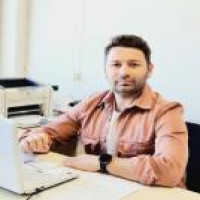

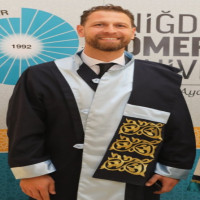
Halil Erdem Akoğlu completed his bachelor's and master's degree in Sports Management at Muğla Sıtkı Koçman University and his doctorate in Sports Sciences at Ankara University. Currently working as an Assistant Professor at Niğde Ömer Halisdemir University, Akoğlu has studies on luxury brand consumption in athletes, online purchasing behaviour in sports consumers, brand experience, electronic word-of-mouth communication, communication and leadership, youth and sports policies.
Translated with DeepL.com (free version)
Language Editor
Section Editor: Sport Management
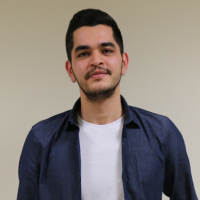
Halil Erdem Akoğlu completed his bachelor's and master's degree in Sports Management at Muğla Sıtkı Koçman University and his doctorate in Sports Sciences at Ankara University. Currently working as an Assistant Professor at Niğde Ömer Halisdemir University, Akoğlu has studies on luxury brand consumption in athletes, online purchasing behaviour in sports consumers, brand experience, electronic word-of-mouth communication, communication and leadership, youth and sports policies.
Translated with DeepL.com (free version)
Section Editor: Movement & Training Sciences

Section Editor: Physical Education and Sport
Section editor: Psychosocial fields
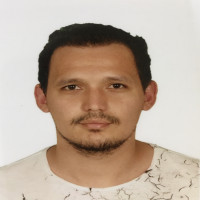





Dr. Erdem Çakaloğlu, Ankara Üniversitesi Spor Bilimleri Fakültesi'nde öğretim üyesi olarak görev yapmaktadır. Lisans eğitimini Ege Üniversitesi Beden Eğitimi ve Spor Öğretmenliği bölümünde tamamladıktan sonra, Ankara Üniversitesi’nde Sporda Psikososyal Alanlar üzerine yüksek lisans ve Spor Bilimleri alanında doktora yapmıştır. Ayrıca Işık Üniversitesi'nde Psikoloji alanında lisans derecesi elde etmiştir. Akademik kariyeri boyunca spor psikolojisi, saha testleri ve fiziksel performans üzerine araştırmalar yapmış, ulusal ve uluslararası birçok bilimsel yayında yer almıştır. Dr. Çakaloğlu, aynı zamanda çeşitli projelerde araştırmacı olarak görev almış ve spor psikolojisi alanındaki bilgi birikimini sosyal sorumluluk projelerine de aktarmıştır.
Editorial Board
Dr. Hannah H. Bo is an assistant professor at Adelphi University, specializing in consumer psychology and consumer experience in the sports industry. Her research focuses on enhancing spectator experiences through artistic entertainment and examining consumer demand factors across various sport servicescapes.
.
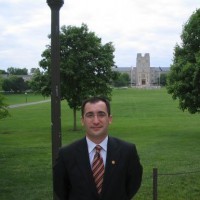
Hakan SUNAY, İstanbul’da doğdu. Lisans eğitimini 1982 yılında Gazi Üniversitesi Beden Eğitimi ve Spor Bölümünde tamamladı. 1985 yılında aynı Üniversitenin Sosyal Bilimler Enstitüsü Beden Eğitimi ve Spor Anabilim Dalında yüksek lisansını, 1995 yılında yine Gazi Üniversitesi Sağlık Bilimleri Enstitüsü Beden Eğitimi ve Spor ABD’de Beden Eğitimi ve Spor Alanından Bilim Doktorluğu unvanını aldı. Eğitim (Program Geliştirme) alanında da doktor unvanına sahip olan Sunay, Ankara Üniversitesinde 1987 yılında Okutman, 1994 yılında Öğretim Görevlisi oldu. 1997 yılında Yardımcı Doçent, 2015 yılında Doçent, 2021 yılında da Profesör unvanını aldı. 2012-2016 yılları arasında 4 yıl Ankara Üniversitesi Sağlık Kültür ve Spor Dairesinde Spordan Sorumlu Koordinatör Yardımcısı olarak görev yaptı. Ankara Üniversitesi Spor Bilimleri Fakültesinde 2 yıl Dekan Yardımcısı olarak görev yaptı. Halen; Spor Yöneticiliği Bölüm Başkanı, Spor Yönetim Bilimleri Anabilim Dalı Başkanı olarak görevine devam etmektedir. Ayrıca, Mart 2021 den beridir Spor Bilimleri Fakültesi Senato temsilcisidir.
Aynı Bölümde, Spor Yönetimi, Türk Spor Teşkilatı, Spor Bilimlerine Giriş, Karşılaştırmalı Spor Sistemleri, Spor Tesislerinin Planlanması ve İşletmesi, Sporda Hizmet İçi Eğitim, Voleybol, Voleybol İhtisas gibi Lisans dersleri ile Türk Spor Teşkilatının İşleyiş Sorunları, Spor Mevzuatı Açısından Türk Spor Yönetimi, Spor Tesis İşletmeciliğinde Güncel Sorunlar, Spor Yönetiminde Güncel Sorunlar, Spor Yönetiminde Güncel Gelişmeler gibi Lisans Üstü (Yüksek Lisans ve Doktora) derslerini yürütmektedir. Ayrıca, MEB, SGM ve Spor Federasyonlarında uygulanan Hizmet içi eğitim ile antrenörlük eğitim programlarında Spor Yönetimi ve Organizasyon ile Sporda Öğretim Yöntemleri ve Sporda Ölçme ve Değerlendirme derslerini vermiş, birçok spor federasyonun (M. Tenisi, Badminton, Modern Pentatlon, Bedensel Engelliler (Ampute Futbol), Voleybol) yönetim, eğitim, teknik ve merkez hakem kurullarında görev almıştır. Spor Bilimleri, Spor Yönetimi Organizasyon ve Program Geliştirme alanında Hakemli dergilerde yayımlanmış yaklaşık 160 adet araştırma ve derlemesi bulunmaktadır. Ayrıca, Singapur, Amerika Birleşik Devletleri, Avustralya, İstanbul, Japonya (Sapporo), Romanya, İspanya (La Coruna), İngiltere (Liverpool), Polonya, Portekiz (Porto), İsveç (Malmö), Kazakistan (Türkistan), Avusturya (Viyana), Arnavutluk (Tiran), Macaristan (Budapeşte) ve Gürcistan’da (Batum) gerçekleştirilen çeşitli uluslararası spor etkinlikleri ile spor sempozyum, kongrelerde Spor Yönetimi ve Organizasyon alanında bildiriler sunmuştur. Sunay’ın tek yazarlı “Spor Yönetimi”, “Sporda Organizasyon” ve “Uluslararası Karşılaştırmalı Spor Yönetim Sistemleri” kitabı ile Editör ve yazar olarak yer aldığı “Spor Bilimlerine Giriş” kitabı ve “Antrenör Eğitimi ve İlkeleri” adlı çok yazarlı kitabı bulunmaktadır. Ayrıca, çok sayıda spor yönetimi alanında kitap ve kitap bölümü yazarlığı bulunmaktadır. Türk Eğitim Derneği, Spor Bilimleri Derneği, AIESEP ve ICHPER-SD gibi ulusal ve uluslararası mesleki kuruluşların üyesidir.

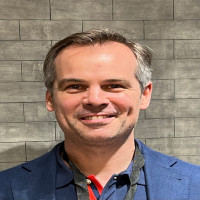
Dr. García-Fernandez conducts research in the field of Sport Management; fitness management, private sport businesses and consumer behavior.
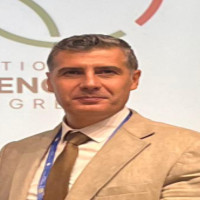
Dr. Hazar conducts research in the field of movement and training science in the areas of training information, sport psychology, sport biology and sport physiology.
Doctor of Philosophy (PhD) in Management
Research and Graduate School of Education
The University of Manchester, England.
Master of Arts (MA) in Leisure Management
The University of Sheffield, England
Sheffield Business School.
Master of Education (M.Ed)
The University of Manchester, England
Research and Graduate School of Education
K. Alexandris is a Dean and Professor at Aristotle University of Thessaloniki, Greece and a Visiting Professor at Sheffield Hallam Business School, UK. He has more than 20 years of experience in academic (University of Illinois, USA, University of Sheffield, UK, Hallam Sheffield University, UK, Aristotle University etc). He currently teaches at Munich Business School, Sheffield Hallam University, JAMK Business School, Finland, University of Seville, and Russian International Olympic University,
He has published more than 100 research papers in international journals in the areas of services, leisure and tourism management and marketing. His published work has received more than 11.000 internationals citations so far. He was recognized among the 2% of best international researchers according to the Stanford List. He is member of the editorial boards of several international journals. He is also the co-author of the books Sport Consumer Behavior: Marketing Strategies (Funk, Alexandris and McDonald, by Routledge) and Performance Measurement and Leisure Management (by Routledge). He is a Board Member of the European Association for Sport Management and Scientific Coordinator of the Annual Conferences.
External Examined: Manchester Metropolitan University
External PhD Examiner (Internationally)
• University of Griffith, Business School, Australia (Two PhD’s)
• University of South Australia, Business School, Australia (one PhD)
• Victoria University, Australia (One PhD)
Contact email address: kalexand@phed.auth.gr
Tel. +30-6973315829, +30-2310-991818
Spor yönetimi alanında eğitim alan Ercan POLAT lisans ve yüksek lisans eğitimini Gazi Üniversitesinde, doktora eğitimini ise Bolu Abant İzzet Baysal Üniversitesinde tamamlamıştır. Günümüzde Yozgat Bozok Üniversitesi Spor Bilimleri Fakültesi Spor Yöneticiliği bölümünde Profesör kadrosunda görev yapmaktadır. Çalışmaları spor seyircisi, fitness sektörü, rekreatif spora katılım, hizmet kalitesi gibi psiko-sosyal konularda yoğunlaşmaktadır.
Antonino BIANCO, PhD
Full Professor, Dean
Department of Psychology, Educational Science
and Human Movement, University of Palermo
Via Giovanni Pascoli 6 - 90144
Palermo, Italy
http://www.unipa.it/persone/docenti/b/antonino.bianco
https://it.wiki.topitalianscientists.org/Antonino_Bianco
WhatsApp. 0039 3206632647
Tel. 0039 09123896910
Fax. 0039 09123860894
Kadir Yıldız did his bachelor’s degree in Sport Management at Cumhuriyet University. He completed master’s degree at Erciyes University and PhD in Sport Management at Abant Izzet Baysal University. Currently, he is an Assoc. Prof. at Manisa Celal Bayar University, and has studies on outdoor and adventure education, mountaineering, orienteering, outdoor sports, statistical modelling, communication in sports, fitness industry, service quality.

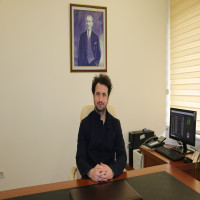
Doç. Dr. Hidayet Suha Yüksel: Lisans eğitimini Gazi Üniversitesi Beden eğitimi ve Spor Yüksekokulu, Beden Eğitimi ve Spor Öğretmenliği bölümünde, yüksek lisans eğitimini Marmara Üniversitesi Beden Eğitimi ve Spor Öğretmenliği anabilim dalında, doktora eğitimini ise Ankara Üniversitesi Beden Eğitimi ve Spor anabilim dalında tamamlamıştır. Doktora eğitimi sonrası Università degli Studi di Palermo’da misafir araştırmacı olarak bulunmuştur. Altı yıllık beden eğitimi ve spor öğretmenliği deneyiminden sonra 2012 yılında Ankara Üniversitesi Spor Bilimleri Fakültesi’nde araştırma görevlisi olarak çalışmaya başlamıştır. Halen Ankara Üniversitesi Spor Bilimleri Fakültesi’nde öğretim üyesi olarak çalışmaktadır. Lisans eğitiminde eğitimde ölçme ve değerlendirme, beden eğitimi ve sporun temelleri, öğretim teknolojileri, eğitsel oyunlar, hareket eğitimi ve program geliştirme gibi dersleri yürütmektedir. Akademik çalışmalarını ağırlıklı olarak öğretmen eğitimi ile teknoloji destekli beden eğitimi ve oyun konularında sürdürmektedir.
